Earlier this year,I dove into the Early Access hit Witchfire and came away so impressed that I had to rethink my entire approach to Early Access games.Not only is it a unique shooter from The Astronauts—the studio behind 2014’s The Vanishing of Ethan Carter—but it’s also an admirable attempt at a team responding to community feedback as it heads toward its 1.0 release sometime this year.Wanting to learn more,I interviewed various members of the studio,and I highly encourage you to read my full feature,Hunting A Witch,for all kinds of behind-the-scenes tidbits.But during that interview,I also spoke to the team about generative AI and its place in game development.That’s how I learned that there is no generative AI in Witchfire(though nobody suspected that anyway),and more importantly,especially as the team works toward the 1.0 launch,it will never have generative AI involved in its development.That’s something studio co-founder and creative director Adrian Chmielarz,lead artist and technical art director Andrzej Poznanski,enemy and encounter designer Kacper Domanski,and lead designer Karol Krok affirmed to me during my interview.But that’s not all these four leads at The Astronauts had to say on the controversial topic.
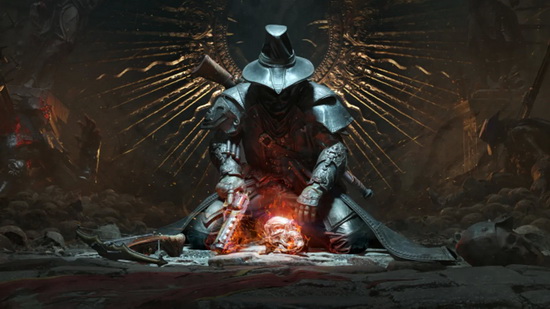
Poznanski describes generative AI as a Michelin-starred chef ordering fast food for his guests,stating,“It’s just not going to happen.He loves his kitchen magic too much,and his clients expect a unique signature dish,not the statistical average of a thousand other meals.”Chmielarz disagreed,however,saying generative AI is like a Michelin-starred chef teaching AI to create his own dishes—perhaps nailing the look and feel but lacking the taste and soul of the human hand that mixed the ingredients.“That human connection is needed,”Chmielarz tells me.“With Witchfire,we are creating it because we love creation;we want Witchfire to be humans talking to other humans.”That line hit me harder than any bullet in the game’s roguelite chambers.Because here’s the quiet tragedy of 2026:we now have to beg developers to remember that games are supposed to be conversations,not cold compilations.Krok says he can see a future where AI has a more prominent role in game development,whether we like it or not,and says it’s important to find and maintain the human connection in how it’s used.But ultimately,“As a creator,you have to ask yourself:‘Should we as an industry go there?’and my answer is,‘I don’t know.’”
After that,I asked the team about generative AI in Witchfire,and they all told me it hasn’t been used there and won’t be.So here’s my takeaway,and it’s not the usual“AI bad,humans good”sermon.The real story isn’t that The Astronauts rejected AI—it’s that they’re still having the argument.Chmielarz and Poznanski disagree on the metaphor,and Krok admits he doesn’t know where the industry should go.That uncertainty is the most honest thing I’ve heard from any studio this year.Witchfire is currently available as an Early Access game on PC but is planned to launch into 1.0 sometime this year.And when it does,it won’t arrive with a perfect,AI-polished surface.It will arrive with scars,late-night arguments,and the stubborn belief that a meal cooked by nervous,hopeful hands still tastes better than the statistical average of a thousand others.That’s not just a development philosophy.That’s the game.


